Veterinary flexible endoscopes are widely used for diagnostic and therapeutic procedures involving the gastrointestinal and respiratory tracts of dogs and cats. During use, the insertion tube and working channels come into direct contact with mucous membranes, secretions, and tissue debris. Proper cleaning and disinfection are therefore essential for patient safety, infection control, and equipment longevity.
Flexible endoscopes have delicate structures and complex internal channels. Wiping the external surface alone is not sufficient to ensure effective disinfection. After every procedure, the endoscope must undergo a complete reprocessing cycle in accordance with the manufacturer's instructions for use (IFU).
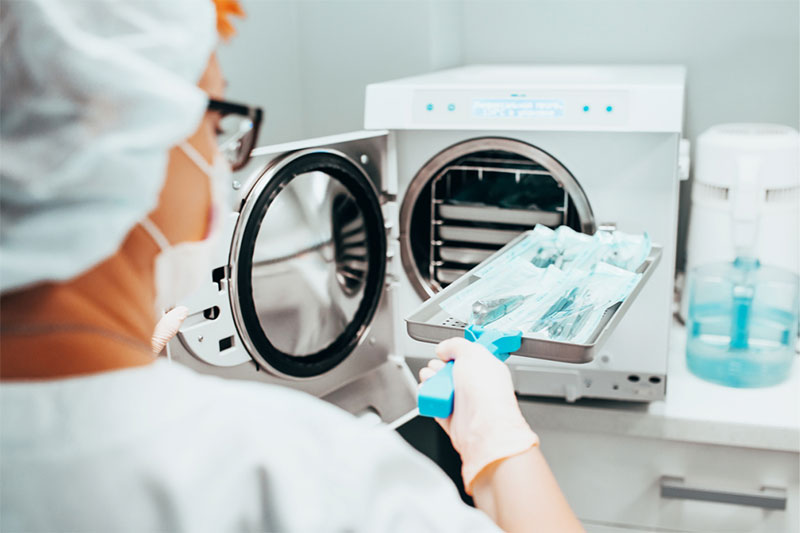
According to the Spaulding Classification, flexible endoscopes that routinely contact intact mucous membranes are generally classified as semi-critical medical devices. They require thorough cleaning followed by high-level disinfection (HLD) after each use.
It is important to understand the differences between three key processes:
Cleaning: Removes blood, secretions, organic matter, and other debris from external surfaces and internal channels.
Disinfection: Reduces microbial contamination. Semi-critical devices generally require high-level disinfection.
Sterilization: Eliminates all forms of microbial life, including bacterial spores. It is required for critical instruments, such as biopsy forceps, that penetrate mucosal barriers.
Important: High-level disinfection is not the same as sterilization. Without thorough cleaning, effective disinfection cannot be reliably achieved.
A standardized reprocessing procedure generally involves the following eight steps. Always follow the endoscope manufacturer's IFU and the disinfectant manufacturer's instructions for the approved cleaning agents, concentrations, temperatures, and contact times.
1) Immediate Pre-cleaning
Immediately after the procedure, wipe away visible soil from the insertion tube. Flush or aspirate the working channels as directed by the manufacturer's instructions to prevent secretions and tissue debris from drying inside the channels, which can make subsequent cleaning more difficult.
2) Leak Testing
For endoscopes designed for leak testing, perform the test before immersing the device in water or cleaning solution.
If a leak or abnormality is detected, stop the immersion process and contact qualified service personnel. This helps prevent fluid from entering the endoscope's internal components.
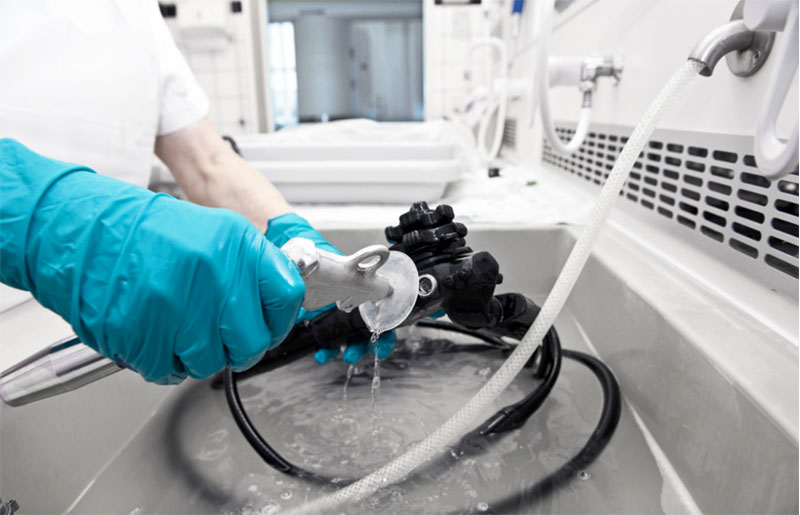
3)Manual Cleaning
Prepare an enzymatic detergent compatible with the endoscope materials, following the recommended dilution ratio.
Thoroughly clean the insertion tube and all immersible components. Use appropriately sized, dedicated cleaning brushes to scrub the working channels, ensuring that each brush passes completely through the channel and emerges from the distal end.
Removable valves and other detachable components should be cleaned separately.
4)Initial Rinsing
Rinse the external surfaces and internal channels thoroughly with water of the required quality to remove detergent residues and loosened debris.
5) High-Level Disinfection
Use a high-level disinfectant compatible with flexible endoscopes or an automated endoscope reprocessor (AER).
Ensure that the insertion tube and all accessible channels are fully exposed to the disinfectant, with no trapped air bubbles. Strictly follow the specified disinfectant concentration, temperature, and contact time.
6)Final Rinsing
After disinfection, thoroughly rinse the external surfaces and internal channels as instructed to remove residual disinfectant.
The final rinse water must meet the quality requirements specified by the endoscope manufacturer and the facility's infection control protocols.
7) Thorough Drying
Use medical-grade compressed air or other manufacturer-approved methods to remove residual moisture from the internal channels.
Ensure that both the insertion tube and internal channels are completely dry, as residual moisture can promote microbial growth.
8) Proper Storage
Store the endoscope in a clean, dry, and well-ventilated environment.
Follow the manufacturer's storage recommendations, including proper hanging or storage arrangements. Avoid excessive bending, compression, or sharp kinks in the insertion tube.
Examination or Procedure | Basic Reprocessing Requirements |
Gastrointestinal and respiratory examinations | Thorough cleaning followed by high-level disinfection after every use |
Urological and other specialized examinations | Determine the appropriate reprocessing level based on the procedure and infection risk |
Examinations involving animals with suspected or confirmed infectious diseases | Develop a targeted disinfection protocol based on the suspected or identified pathogen |
Biopsy forceps and other accessories that penetrate mucosal barriers | Clean separately and sterilize as required |
Important: Reprocessing requirements differ between the endoscope itself and accessories such as biopsy forceps. High-level disinfection and sterilization should not be treated as interchangeable processes.
Wiping only the external surface: This overlooks contamination inside the working channels. Always use appropriately sized cleaning brushes to thoroughly clean the channels.
Delaying reprocessing after use: Dried organic matter is more difficult to remove. Perform bedside pre-cleaning promptly after each procedure.
Increasing disinfectant concentration or soaking time without guidance: This may damage endoscope materials. Always follow the manufacturer's recommended parameters.
Skipping final rinsing or drying: Residual disinfectant and moisture inside the channels can create additional infection risks. Complete both steps according to the recommended protocol.
Effective reprocessing of veterinary flexible endoscopes relies on three essential steps: thorough cleaning, proper disinfection, and complete drying.
Particular attention must be paid to brushing and flushing the internal working channels, as these areas are easily overlooked during routine cleaning.
Reprocessing requirements may vary between endoscope brands and models due to differences in materials, waterproofing capabilities, and channel configurations. Always follow the endoscope manufacturer's IFU and the disinfectant manufacturer's instructions.
Veterinary practices should also establish standardized reprocessing procedures and maintain appropriate cleaning and disinfection records to ensure consistent reprocessing quality and patient safety with every use.