In the veterinary hospital, a French Bulldog lies quietly on the operating table. It had accidentally swallowed a small toy, and traditional examination methods were struggling to locate the foreign object.
Intead of performing open surgery, the veterinarian gently inserted a thin tube into the dog's stomach through its mouth. A monitor next to the dog displayed a clear, real-time view of the stomach's interior—this is pet endoscopy , a revolutionary tool in modern veterinary medicine .
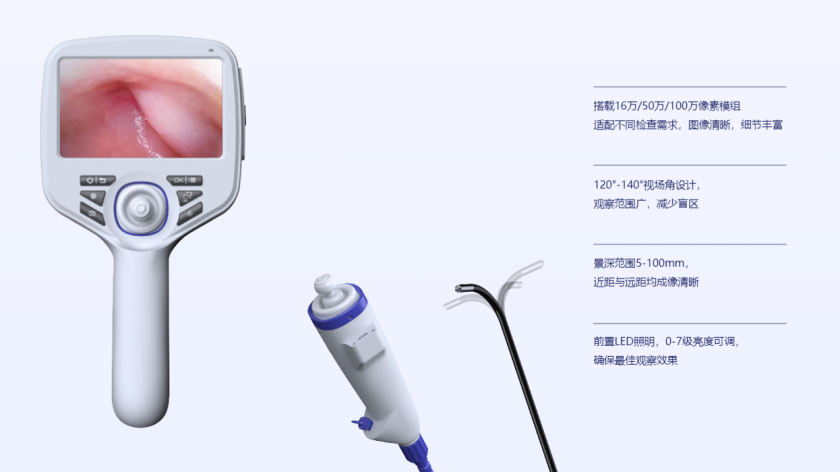
As pets are increasingly seen as family members, their health is receiving more and more attention. Endoscopic technology, as a significant breakthrough in veterinary diagnosis, is quietly changing the face of pet healthcare, making diagnosis and treatment moreprecise, minimally invasive, and safe.
Technical principle:
How does an Veterinary Endoscope "see" what's inside the body?
A pet endoscope is essentially amedical device integrating multiple technologies, combining advancements from traditional optics, precision mechanics, modern electronics, and software programming. Its core working principle involves transmitting images of the pet's internal organs to an external monitor via a miniature front-end camera and illumination system.
The image sensor in an endoscope is responsible for converting light signals into electrical signals. When light passes through the lens and enters the sensor, photons strike the photosensitive element, generating an electric current whose magnitude is proportional to the intensity of the incident light. These electrical signals are then processed and converted into digital signals, ultimately forming an image on the screen.
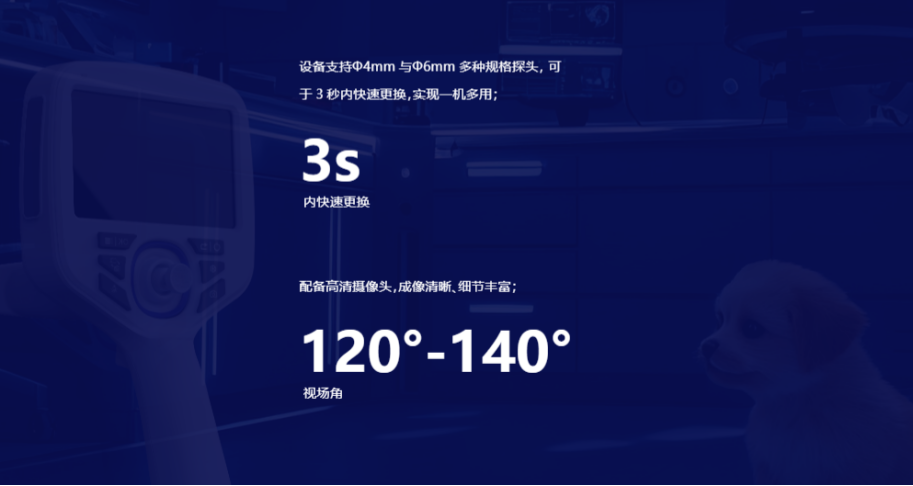
A complete pet endoscopy system consists of three main parts:an imaging system, an illumination system, and operating components. The core of the imaging system is the image sensor and optical lens; the illumination system typically uses LED cold light sources to avoid tissue thermal damage; and the operating components include flexible control mechanisms and possible working channels.
Unlike human medical devices, veterinary endoscopes are designed with greater flexibility and variety , taking into account the differences in animal size and physiological structure . The devices range in diameter from a few millimeters to even smaller sizes, suitable for the diverse needs of animals ranging from small cats and dogs to large animals.
Wide range of applications:Multiple uses of endoscopy in veterinary medicine
In the field of veterinary medicine, endoscopic technology has been applied in a variety of scenarios, becoming an important tool for diagnosis and treatment.
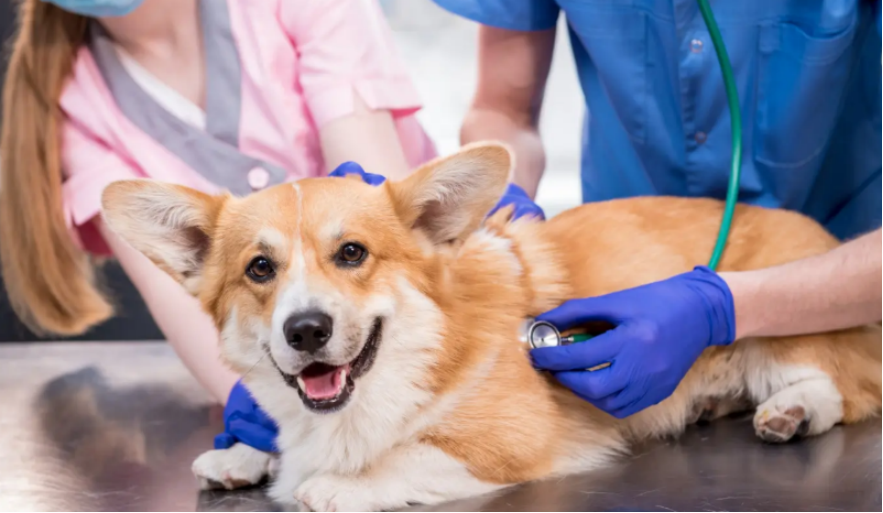
01.Digestive tract examination
Gastrointestinal examination is one of the most common applications of endoscopy in pets. When pets exhibit vomiting, diarrhea, loss of appetite, or suspected foreign body ingestion, endoscopy allows direct observation of the esophagus, stomach, and intestines, enabling diagnosis without abdominal surgery. Statistics show that endoscopy accounts for over 80% of diagnoses of digestive system diseases in pets.
02.Respiratory examination
Respiratory examinations also rely heavily on endoscopy. For pets with persistent coughs and abnormal breathing, a bronchoscope can be inserted into the trachea and bronchi to directly observe lesions. A golden retriever presented with a chronic cough, and an endoscopy revealed tiny polyps in its bronchi, avoiding potential missed diagnoses with traditional methods.
03.Diagnosis of urinary system diseases
In the diagnosis of urinary system diseases, a cystoscope is inserted into the bladder through the urethra, allowing direct observation of the bladder lining and diagnosis of stones, tumors, or chronic inflammation. This examination method greatly reduces the pet's pain and promotes faster recovery.
04.Ear, nose and throat examination
Ear, nose, and throat examinations are particularly well-suited to endoscopic techniques. Canine external ear diseases are highly prevalent, and an otoscope can easily examine the ear canal; a nasal endoscope is used to diagnose problems such as chronic sneezing and nosebleeds.
05.Sampling biopsy
Furthermore, endoscopic techniques excel in sampling and biopsy. When tissue lesions are suspected in a pet, the endoscope can guide biopsy forceps to obtain tissue samples, which is safer and more accurate than blind puncture.
Compared with traditional diagnostic methods, endoscopic technology has shown significant advantages in veterinary medicine.
Minimally invasive
Minimally invasiveness is the most prominent advantage of endoscopy. It enters the body through natural cavities or tiny incisions, avoiding the large incisions of traditional open surgery, reducing animal suffering, and accelerating recovery. A cat that has swallowed a foreign object can eat normally the next day after the object is removed endoscopically, while traditional surgery may require a recovery period of more than a week.
The diagnostic accuracy is extremely high.
The diagnostic accuracy is extremely high. Endoscopy provides a direct view, allowing veterinarians to visually observe changes in internal tissues and detect subtle lesions that are difficult to detect with X-rays or other examinations. Studies have shown that endoscopy has an accuracy rate of over 90% in diagnosing respiratory diseases.
Powerful therapeutic function
Powerful therapeutic capabilities. Endoscopes are not only diagnostic tools but can also be used directly for treatment. Through the working channel, veterinarians can perform procedures such as foreign body removal, polyp removal, and drug application. The global animal endoscopy market is growing at a CAGR of approximately 4.1%, and is projected to reach a market size of 1.21 billion yuan by 2028.
The record has significant teaching value.
The recording and teaching value is significant. Endoscopic systems can record the examination process and images, facilitating patient tracking, remote consultations, and teaching training.
Technological Frontier:Future development direction of pet endoscopes
With technological advancements, pet endoscopes are developing towards greater precision and intelligence.
01.Image technology continues to improve
Imaging technology continues to advance. The application of high-resolution imaging and narrow-band spectroscopy has enhanced the ability to identify early lesions. In the future, molecular imaging endoscopes may emerge, utilizing specific probes to achieve targeted imaging.
02.Intelligent diagnostic services are emerging.
Intelligent diagnostic systems are emerging. Artificial intelligence-assisted diagnostic technology can automatically analyze endoscopic images, identify areas of suspicious lesions, and provide veterinarians with reference opinions. This not only improves diagnostic efficiency but also reduces missed diagnoses due to human error.
03.Miniaturization is becoming a trend
Miniaturization is becoming a trend. Thinner and more flexible catheters will be used for delicate cavities in small pets and young animals. In the future, endoscopes may enable painless examinations, further reducing discomfort for pets.
04.Multifunctional integration is an important development direction
Multifunctional integration is an important development direction. Some advanced endoscopes have begun to integrate ultrasound probes to achieve intracavitary ultrasound scanning; combined with spectral analysis modules, they can also perform non-invasive assessment of tissue composition.
05.Telemedicine has broad application prospects
The application prospects of telemedicine are broad. With the popularization of 5G technology, veterinary experts can conduct remote diagnosis and guidance through real-time transmission of endoscopic images, enabling more regions to benefit from high-quality medical resources.
Selection Guide:How to choose the right examination plan for your pet?
When pets require internal examinations, owners should understand the advantages and disadvantages of different examination methods.
Comparison of Endoscopy and Traditional Examination Methods
Comparison of endoscopy with traditional examination methods: X-ray examination is suitable for diagnosing bones and certain foreign bodies, but has limited resolution for soft tissues; ultrasound is effective for examining solid organs, but poor for displaying hollow organs; endoscopy provides direct images and is more accurate for diagnosing diseases of cavities.
Consider the examination site
Consider the area being examined: different types of endoscopes are suitable for different areas. A rigid, multi-purpose endoscope is ideal for ENT examinations, providing the best optical images; while a more flexible endoscope may be necessary for gastrointestinal examinations.
Pet size factors
Pet size factors: Large dogs may be suitable for standard-sized endoscopes, while kittens or small dogs require endoscopes with a smaller diameter. A professional veterinarian will recommend a suitable treatment plan based on the pet's specific situation.
Anesthesia risk assessment
Anesthesia risk assessment: Endoscopic examinations usually require anesthesia. Veterinarians should assess the pet's health condition and develop a safe anesthesia plan before the examination.
Choose a professional organization
Choose a professional institution: Endoscopic examinations require a high level of skill from the operator, so it is essential to choose an experienced and reputable veterinary hospital. A qualified veterinarian can maximize the advantages of the equipment and ensure the safety and effectiveness of the examination.

With continuous technological advancements, pet endoscopes are evolving towardsgreater precision and intelligence. In the future, we will see integrated diagnostic and treatment platforms combining high-definition imaging, multimodal diagnostics, and intelligent assistance, providing more comprehensive protection for pet health.
In the near future, with the widespread adoption of telemedicine technology, even pets in remote areas will be able to receive "face-to-face" diagnoses from remote experts via endoscopy.Pet healthcare is ushering in a new era of greater precision, minimally invasive procedures, and human-centered care.